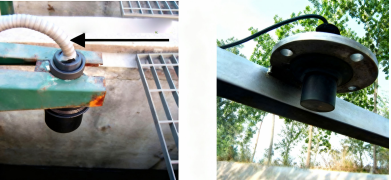
Product Introduction
Ultrasonic open channel flow meters calculate the distance from the sensor probe to the liquid surface by measuring the time of sound wave reflection after contacting the channel water surface and the speed of sound, thereby determining the liquid level. The channel flow rate is then calculated using formulas based on the structural dimensions of the weir.
Product Selection
1. Selection of Measurement Range and Accuracy
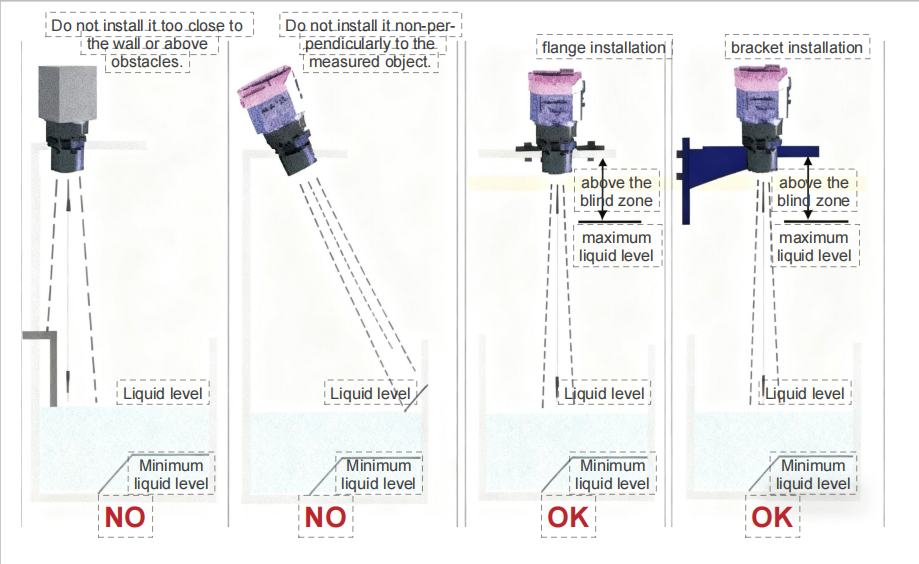
For agricultural irrigation terminal channels and sewage discharge channels, select a water level measurement range of 2-4m with a probe blind zone of 0.3-0.5m.
Choose accuracy class based on actual needs for cost-effectiveness:For data statistics or process monitoring only (no precise control/measurement required):
Select lower accuracy classes (e.g., 1.5, 2.5, or 4.0) for cost savings.For irrigation water charging or sewage discharge fee calculation: Choose higher accuracy classes (e.g., 1.0, 0.5, or above).
2. Selection and Installation of Weirs/Flumes
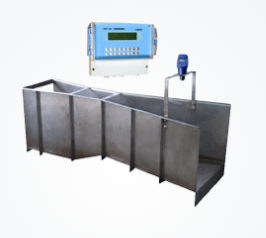
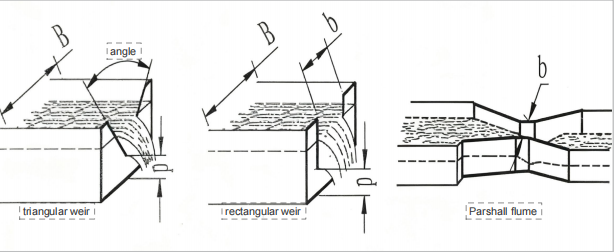
Three common types: triangular weir, rectangular weir, and Parshall flume.
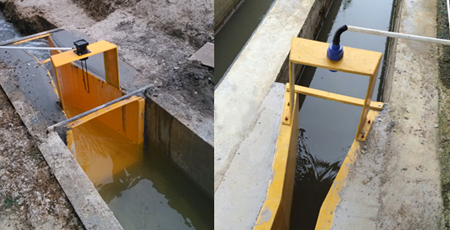
Recommended for agricultural irrigation and sewage discharge: Parshall flume (calibrated via experiments for higher accuracy;
requires unobstructed downstream flow with water level difference).Triangular/rectangular weirs: Based on theoretical calculations,
prone to additional errors if usage conditions are ignored; require specific upstream-downstream elevation differences.
3. Selection of Power Supply Type
Power supply types include 24V DC, 12V DC, 5V DC, 220V AC, etc. If there is a municipal power supply on-site,
the 220V AC power supply type should be selected. If there is no municipal power supply on-site, priority should be given to 12V DC—since the supporting DTU/RTU all use 12V DC power supply, this ensures consistency of on-site power supply.
4. Selection of Signal Transmission Type
Digital signals (preferred): Support interfaces like RS485/RS232 and protocols such as HART, Modbus, Profibus. Resistant to environmental interference,
stable transmission,easy to store/exchange, and compatible with data acquisition systems.Analog signals: Include 4-20mA DC current (commonly used),
voltage, and resistance (rarely used).
5. Selection of Protection Class and Housing Material
Most of our solutions are applied in outdoor environments: the protection class of the probe part must reach IP68, the protection class of the instrument display part should not be lower than IP66, and the wire entry holes of the instrument must be sealed. The housing material should meet the requirements of non-oxidation, resistance to aging, and non-deformation within the range of ambient temperature and humidity. For applications in sewage discharge channels, it should comply with the Environmental Protection Industry Standard of the People's Republic of China HJ/T15-2007.







.png)
.png)