
Platform Functions
1. Overall Control and Scientific Decision-Making – System Operation Cockpit
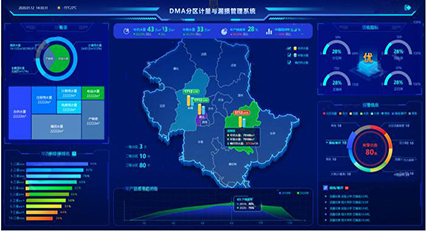
Water usage situation at a glance on one screen: Integrates the total water consumption and execution progress of the current year, calculates water consumption per mu, water-electricity conversion coefficient, etc., to avoid the risk of excessive water use.
Water usage situation at a glance on one screen: Integrates the total water consumption and execution progress of the current year, calculates water consumption per mu, water-electricity conversion coefficient, etc., to avoid the risk of excessive water use.
Dimension data dynamically presented: Displays the distribution of towns in the jurisdiction, project overview, and ranking of water use efficiency, facilitating the management of large water-consuming areas.
Equipment status at a glance: Counts the total number of equipment and the proportion of online status.
2.Water Intake Information, Holographic Perception
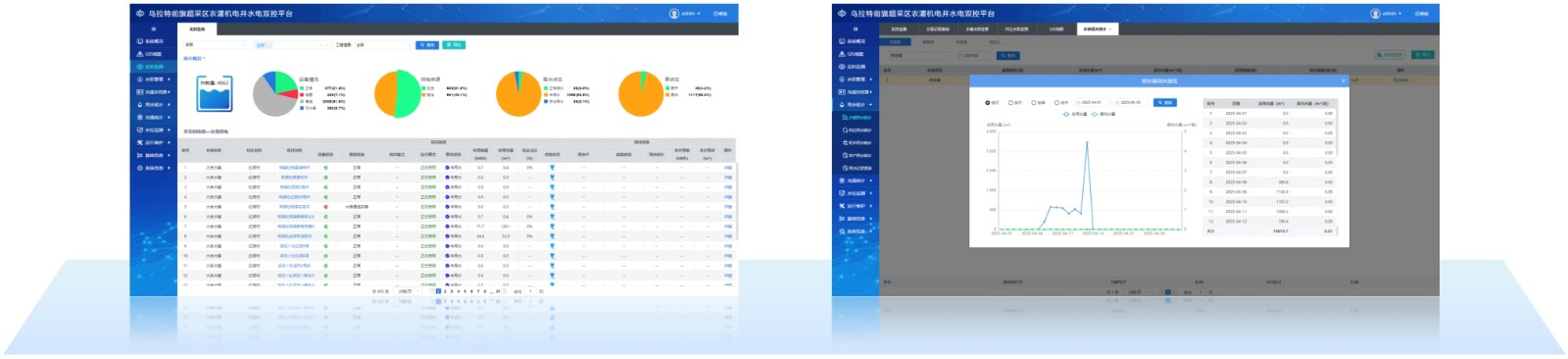
Cooperating with monitoring equipment, it grasps key parameters in real-time, such as the water output of thousands of motor-pumped wells, water intake information of each farmer, and the working status of each monitoring device and motor-pumped well. You can click the pie chart to filter the required motor-pumped well information.
3.Water Quantity Control, Automatic Shutdown When Exceeding Limits
When a motor-pumped well has no water rights or the IC card has no water quantity, the water pump/valve will be automatically closed, making water intake impossible and avoiding excessive water use.
4. Illegal Water Use Alarm, Strengthening Water Intake Supervision
Intelligently identify abnormalities in water/electricity metering, trigger alarms, and automatically shut down pumps/valves to reduce water theft losses.
Record water intake data completely, form traceable water use archives, and enable inquiries at any time.
5.Scientific Water Right Management, Transparent and Flexible Settlement
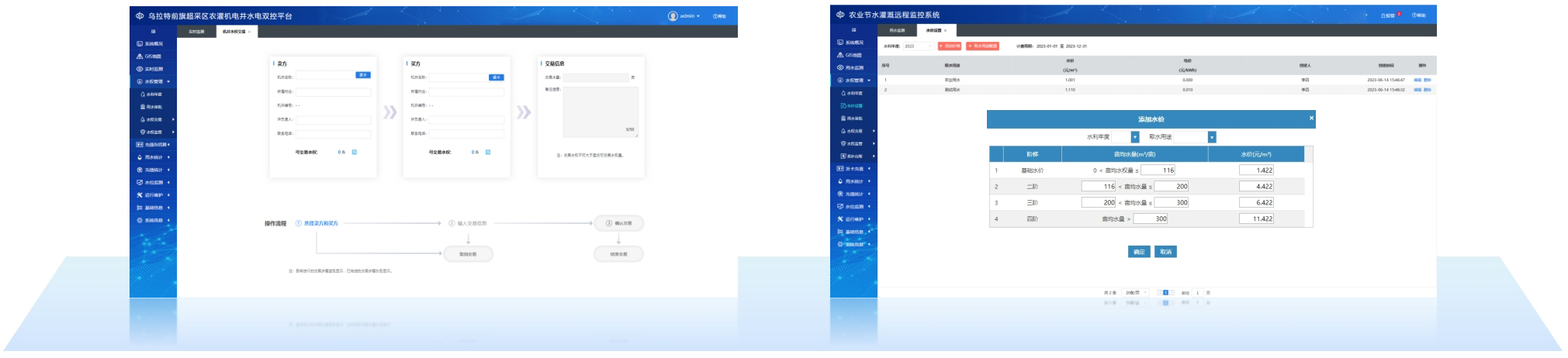
Water right allocation on demand: Verify water volume based on cultivated land area and crops, and allocate water rights to each motor-pumped well or farmer.
Surplus water right trading: After farmers save water, they can sell the surplus water rights to increase additional income, and optimize water resource utilization through market means.
6.Tiered Pricing to Help Farmers Save Water
The number of tiers can be set as needed, supporting up to 4 tiers. This encourages farmers to use water rationally and reduce water fees.
7.Intelligent Water Demand Forecasting and Analysis to Optimize Water Right Allocation
Analyze water supply and demand by region, and display the ratio of planned water consumption to actual water consumption in the form of bar charts.
Predict water demand based on historical data and provide more water-saving water right allocation suggestions for the coming year.
8.Health Monitoring of Irrigation Equipment and Fault Alarm
Real-time alerts for power supply, network, and instrument faults are provided, facilitating administrators to handle issues promptly and ensuring uninterrupted irrigation.
9.Synchronized Supervision via Mobile APP, Enabling Control Anytime and Anywhere with Fingertips
Administrators can remotely check information such as the water output of motor-pumped wells and users’ water consumption, recharge farmers’ IC cards, and maintain equipment, thereby improving response speed.
Farmers can remotely turn on/off pumps/valves, inquire about water use information, and make recharge and payment, enhancing the convenience of irrigation.







.png)
.png)